Boilers and heat pumps · Piece
Old radiators, sludge and what a heating system needs
Old radiators and sludge are usually dealt with by flushing the circuit and adding inhibitor. Approved Document L asks for both before a new heating appliance goes in, commissioned to BS 7593. Radiator size is a separate question.
Most useful for: Anyone with an old wet heating system, especially before a boiler change
Compiled from the sources at the end. Updated .
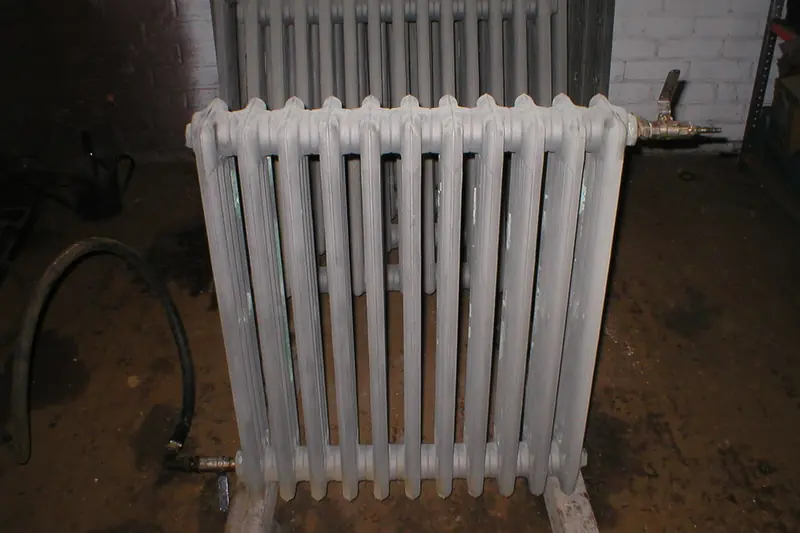
Sludge is the everyday word for the dark debris and corrosion that can build up in the water of a closed heating circuit. No official figure says how fast it forms or how much heat it costs, so this page keeps those points general. What can be pinned down is what the rules ask for and which questions to put to a heating engineer.
What can sludge look like from the outside?
None of the signs below proves sludge on its own. They are reasons to have the system looked at, and an engineer may find something else entirely.
| What you notice | What it can point to | Next step |
|---|---|---|
| Radiator cool at the bottom, warm at the top | Debris settled in the panel or columns | Ask a heating engineer to test system water |
| Radiator cool at the top, warm at the bottom | Air in the radiator, sometimes a wider circuit fault | Ask how to bleed it, or have it checked if it recurs |
| Some rooms always colder | Balancing, valves or debris | Ask for the system to be checked and balanced |
| Noises from the boiler or pipes | Several causes, including scale | Gas Safe registered engineer for anything at the boiler |
Hard water can add its own problem around the boiler and hot water side, which is covered on the page about limescale in boilers.
Does a new boiler mean the system has to be cleaned?
Yes, in the sense that the circuit must be prepared. Para 8.8 of Approved Document L says that before a new heating appliance is fitted, circuits should be flushed and inhibitor added, and the work commissioned to BS 7593. In the 2026 text the same step is para 7.8.
The rule does not settle which flushing method to use, and this page makes no claim for one method over another. Ask how the circuit will be flushed, what inhibitor goes in, and how the result is recorded. The wider job is on the boiler replacement page.
The circulator, the pump that moves water round the circuit, is another part to ask about while the system is being worked on.
Will old radiators cope with lower temperatures?
New or fully replaced wet systems must be sized for a maximum flow of 55°C or lower. Where that is not feasible, for example with no space for larger radiators, para 5.10 asks for the lowest design temperature possible. A radiator running cooler gives out less heat, so an old one may or may not be big enough, and only a room-by-room calculation answers that.
The same point matters for anyone weighing up a heat pump in a Victorian terrace. Large cast iron radiators may be well sized for this, or may not, and a survey should say which.
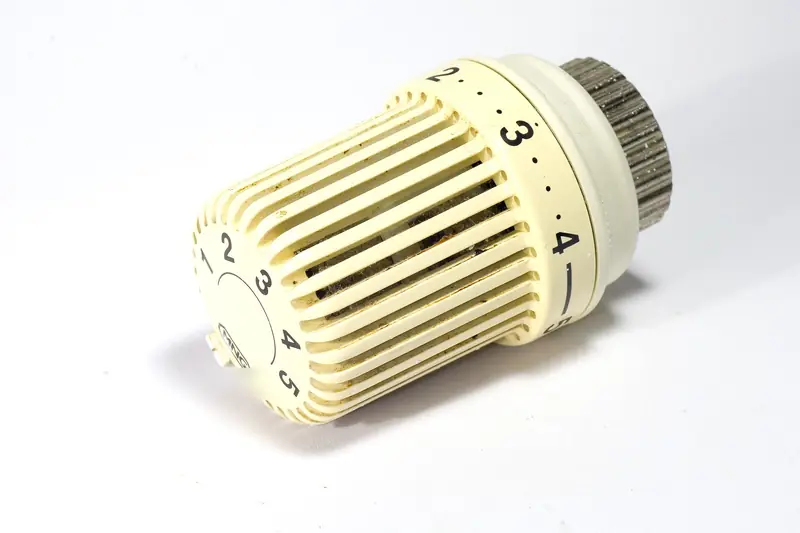
What else can sit behind old pipework?
Age brings other materials with it. The DWI and WaterSafe say lead solder is banned on drinking water pipes but still legal on closed heating circuits, so heating joints and drinking water joints follow different rules. Keep them separate when pipes are altered.
HSE's list of places asbestos can be found at home includes lagging on pipes and boilers. Do not disturb, sand or sample anything suspect in a home built or refurbished before 2000, and tell contractors before they start.
Old radiators in listed and conservation homes
Cast iron radiators, pipe runs and valves can all matter in a listed building. South Cambridgeshire's 2009 guidance answers "maybe" on whether services need consent, asks for care in rooms with historic features, and lists thermostatically controlled radiators among ways to improve efficiency. That wording is one council's from 2009, so ask the conservation officer first. The page on radiators and pipework in listed buildings takes it further, and Part L in older homes explains the limits of the exemption.
Who settles what
- Testing and flushing system water
- Heating engineer
- Anything at the boiler or gas pipework
- Gas Safe registered engineer
- Radiator sizing for lower temperatures
- Heating engineer, room by room
- Changes in a listed building
- The council; ask the conservation officer first
Other questions on this
Should a sludgy radiator be replaced or cleaned?
It depends on its condition and what the engineer finds. Some are worth keeping and refurbishing, others not, and no official rule makes that decision for you. Ask for both options before agreeing to a replacement.
Does inhibitor last forever once it is added?
It should not be assumed to. Ask the engineer to check inhibitor as part of servicing, which HSE strongly advises at least once a year for gas appliances.
Does old lead solder on a heating pipe have to come out?
Not because of the solder ban, which applies to drinking water pipes. If heating and water pipes run side by side and are being altered, ask the plumber to make clear which joint belongs to which system.
Sources, read 4 November 2026: Approved Document L, Volume 1, 2021 with 2023 amendments; Approved Document L, Volume 1, 2026; DWI, lead in drinking water; WaterSafe, lead-free solder; HSE, asbestos in homes diagrams; HSE, gas safety FAQs; South Cambridgeshire Listed Buildings SPD, 2009.