Section front
Old pipes
Homes built before 1970 may have lead pipes, and any building built or refurbished before 2000 may contain asbestos. These pages cover what to look for, what to leave alone and who to ask.
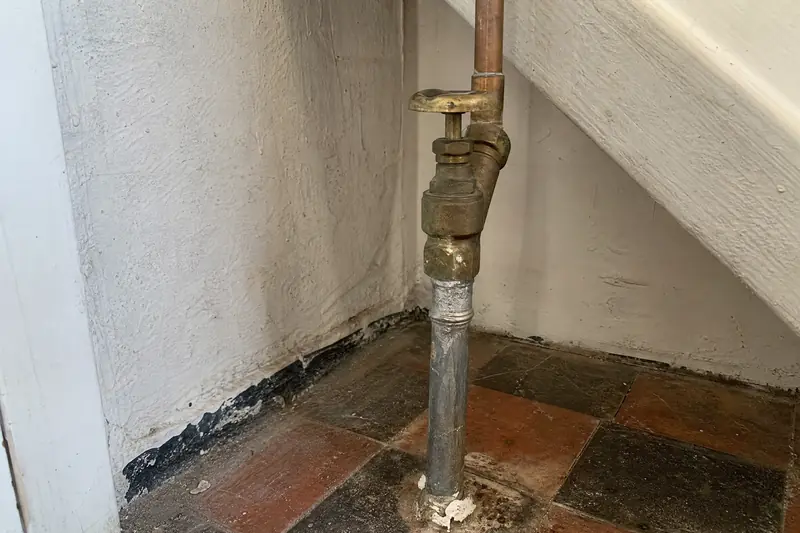
Lead pipes in an older Cambridge house
Lead water pipes in UK homes are most likely before 1970, so an older Cambridge house is worth checking. Look at the pipe by the inside stop tap, then ask a plumber or your water company.
Longer pieces
Asbestos around old boilers, flues and tanks
Asbestos around an old boiler, flue or tank is possible in any home built or refurbished before 2000. Do not disturb it. Tell every contractor what you suspect before they start, and ask council environmental health for advice.
Shared pipes and drains in Cambridge terraces
A shared drain in a terraced house is usually a sewer, and since 1 October 2011 most that connect to the public system belong to the sewerage company. A drain serving only your house, inside your boundary, stays yours.
In brief
Lead in tap water: what to do this week
A lead in tap water test comes from your water company, which will sample the kitchen tap on request and give written advice. Until then, run off standing water before drinking or cooking.
Old cold water tanks in the loft
A cold water tank in the loft of an older house may be asbestos cement, as HSE lists water tanks among places it can occur. Leave a grey, cement-like tank undisturbed and tell any plumber before work starts.
Low water pressure in an older house
Low water pressure in an old house can start in the street or in your own pipes. The legal minimum is 7 metres, or 0.7 bar, in the communication pipe; the rough check is 4.5 litres in 30 seconds.
Frozen pipes in an older house
Frozen pipes in an older house need gentle warmth, never a flame or boiling water. Find the stop tap first, because a pipe that thaws can turn out to have split.