Listed and conservation · In brief
Radiators and new pipework in a listed building
Radiators in a listed building can need consent or not, depending on the room, the grade and the route of the pipes. South Cambs' guidance says "Maybe", so show the conservation officer your plan first.
Most useful for: Owners of listed homes adding radiators, pipe runs or a bathroom
Compiled from the sources at the end. Updated .
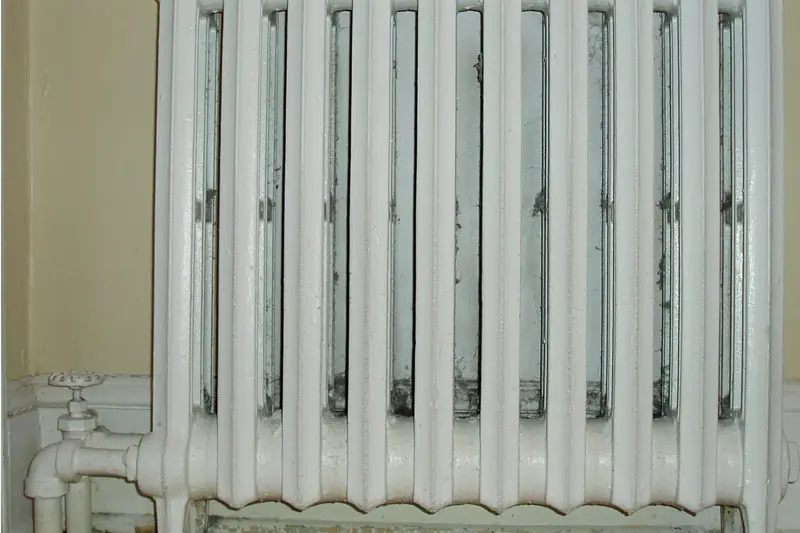
The radiator is often the easy part, and the pipe to it is what touches the building. South Cambs' 2009 Listed Buildings guidance says new or upgraded services do not generally require consent, with care in rooms with carvings, mouldings, cornices, plaster ceilings or other historic features. It also names introducing pipework and cabling as an issue to consider, and says services in Grade I or II* buildings may require consent. That wording is a starting point from one council, written in 2009. It also lists thermostatically controlled radiators among ways to improve a listed building's efficiency. Greater Cambridge Planning is where to ask for a city or village address.
What should you check before lifting a floorboard?
- Listing covers the interior and fixed objects, so ask before taking out an old radiator, floorboards or panelling to make way for new ones.
- Consent is likely for minor alterations and "possibly even repairs", the guidance says, so do not assume a repair is outside the process.
- Like-for-like applies only to existing traditional materials, so a modern pipe or valve is not automatically covered by it.
- Working without consent where it is needed can be a criminal offence.
The wider rules for boilers and flues are under listed building consent for heating, and old cast iron systems get their own treatment under old radiators and sludge.
Bathrooms and larger radiators
New en-suites are clearer in the guidance: they require consent, including new partitions, and the guidance asks you to consider new soil and waste plumbing and ventilation. New bathrooms need ventilation, which may then bring a wall or roof opening into the discussion.
Size can come up too. South Cambs' guidance says ground source heat pumps with radiators normally need larger radiators, and calls underfloor preferable as it runs at a lower temperature. Underfloor can also mean lifting floors, so raise it with the officer before you budget for it. See heat pump rules for the planning side.
Bring the conservation officer a sketch of radiator positions and pipe routes, with photographs of each room. The council decides, and government guidance says to ask first if in any doubt.
Sources, read 4 November 2026: South Cambridgeshire Listed Buildings guidance, 2009; Greater Cambridge Planning: listed buildings; GOV.UK: conserving and enhancing the historic environment; Planning (Listed Buildings and Conservation Areas) Act 1990, section 9.