Boilers and heat pumps · Piece
Replacing the boiler in an older Cambridge terrace
Boiler replacement in a terraced house normally means a 92% efficient appliance, a flushed system, scale treatment in hard water and a carbon monoxide alarm, with all gas work done by a Gas Safe registered engineer.
Most useful for: Terraced house owners and landlords replacing an old gas boiler
Compiled from the sources at the end. Updated .
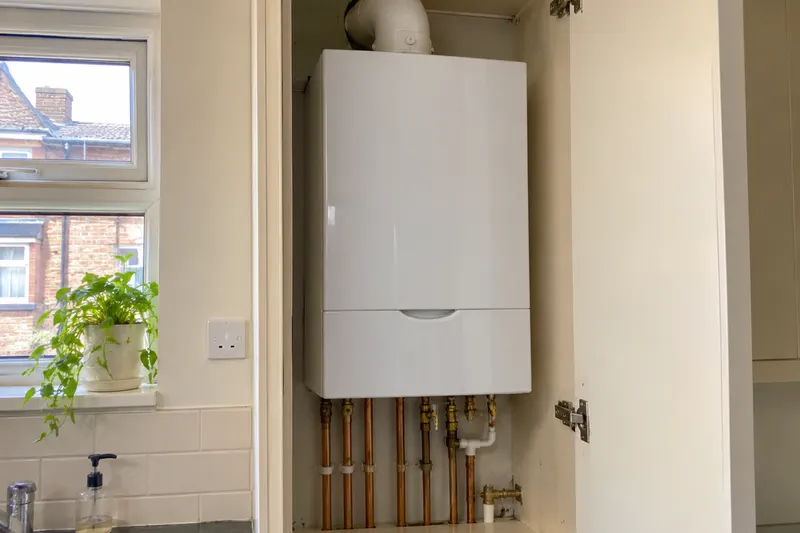
Two Building Regulations documents set most of the rules: Approved Document L for fuel and power, and Approved Document J for flues and alarms. The text of L in force now is the 2021 version with 2023 amendments. A 2026 version takes effect on 24 March 2027, and some paragraph numbers change with it.
Older Cambridge streets can make the job tighter than the boiler itself. Terraced houses north of Mill Road stand directly on the pavement, and Newnham Croft terraces have small fronts and long thin back gardens. Both can limit where a boiler and its flue go.
What does the new boiler have to meet?
Table 6.2 of Approved Document L sets a 92% ErP floor for a gas boiler on wet heating in an existing home, with a route for exceptional circumstances. The rule is the number, not the word "condensing". In practice it usually points to a condensing boiler, but that is this site's reading rather than the document's wording.
A new gas combi carries one more requirement under para 6.2. It needs one of flue gas heat recovery, weather compensation, load compensation, or a smart thermostat with automation and optimisation. Work on a system with a boiler also needs a boiler interlock (para 5.25). The page on boiler controls covers those options, and the choice between boiler types has its own page.
Flushing and scale: two lines to look for on the quote
Before a new heating appliance goes in, para 8.8 says to flush the circuits and add inhibitor, then commission to BS 7593 (the same step is para 7.8 in the 2026 text). Old systems can hold a good deal of debris, which is covered on the page about radiators and sludge.
The same paragraph asks for suitable measures in hard water areas to treat the feed to water heaters and the hot water circuit of combi boilers, to reduce limescale. Approved Document L defines hard water as more than 200 ppm. The DWI's national map puts the Cambridge area in its top band, and TapWater.uk, a secondary source that sells softener quotes, gives around 330 mg/L for the CB area. Your water company can give the current figure for your postcode.
No specific device is named in the rule, so ask the engineer which measure is proposed and why. The pages on limescale in boilers and scale inhibitors go further.
Where can the flue go?
That is the engineer's decision, made against the job in front of them. Approved Document J requires flue outlets to allow combustion products to disperse, and para 3.23 gives Diagrams 34 and 35 as one way to comply. This page quotes no clearance distances, because they depend on the wall, openings and boundaries of the house. The page on flue position and plumes deals with neighbours and terraced streets.
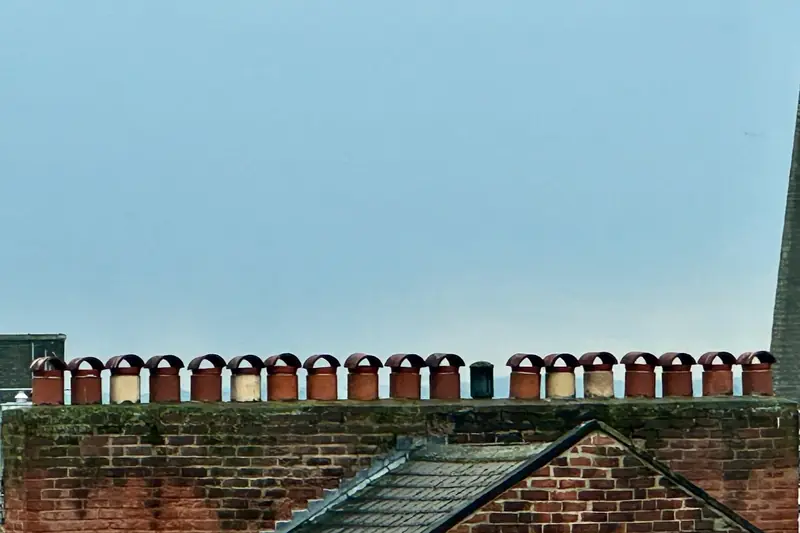
A flue change on a listed building is a separate question. The council decides, so ask the conservation officer first and read the page on listed building consent.
Who can do the work, and what should you check first?
Gas work is for a Gas Safe registered engineer only. Before anything is taken off the wall, check the engineer's ID card, as set out in the Gas Safe checks page.
Gas Safe Register, with Denise Van Outen, shows why a smart van and good reviews prove nothing and why you should check the engineer's ID card and the official register. Not made by this site; duration 1:08.
A new or replacement fixed gas appliance, other than one used only for cooking, needs a carbon monoxide alarm in that room (Approved Document J, para 3.43). Alarms should meet BS EN 50291-1:2018.
HSE lists asbestos insulating board around boilers, cement flues and pipe lagging among places it can be found in homes built or refurbished before 2000. Do not drill, sand, break or sample it, and tell the engineer about any suspect material before work starts.
| Item | Requirement | Where it comes from |
|---|---|---|
| Efficiency | At least 92% ErP, with an exceptional route | AD L Table 6.2 |
| Gas combi extra | One of four listed energy measures | AD L para 6.2 |
| Boiler interlock | Needed for work on a system with a boiler | AD L para 5.25 |
| System water | Flush, inhibitor, commission to BS 7593 | AD L para 8.8 |
| Hard water | Suitable measures to reduce limescale | AD L para 8.8 |
| CO alarm | In the room with the new appliance | AD J para 3.43 |
Who settles what
- Gas work and commissioning
- Gas Safe registered engineer
- Flue position on the job
- Gas Safe registered engineer, working to Approved Document J
- Which scale measure
- Engineer and householder together; no device is named in the rule
- Flues on a listed building
- The council; ask the conservation officer first
- Suspect asbestos
- Tell the contractor first; council environmental health can advise
Other questions on this
Does a like-for-like gas boiler swap need a Building Control application?
Under para 3.1 of Approved Document J, a gas-appliance-only installation by a member of the approved class need not be notified to Building Control. Other work done at the same time may be treated differently, so ask the engineer what the whole job involves.
Could the new flue go up the old chimney?
That is a question for the engineer on site. In a listed building, South Cambridgeshire's 2009 guidance says lining a flue may require consent, and the council normally only supports reversible flexible steel liners. Ask the conservation officer before agreeing a route.
Does a carbon monoxide alarm mean servicing can wait?
No. HSE recommends alarms but says they are not a substitute for servicing, and it strongly advises a service at least once a year.
Will the 2027 Part L change affect a boiler fitted this winter?
The 2021 text applies until 24 March 2027. Transitional rules sit in a government circular, so if a job straddles that date, ask the engineer which version they are working to.
Sources, read 4 November 2026: Approved Document L, Volume 1, 2021 with 2023 amendments; Approved Document L, Volume 1, 2026; Approved Document L publication page, GOV.UK; Approved Document J, 2022; HSE, gas safety FAQs; HSE, asbestos FAQs; DWI hardness map; TapWater.uk hardness map (secondary source that sells softener quotes); Mill Road Conservation Area Appraisal, 2011; Newnham Croft Conservation Area Appraisal, 2013; South Cambridgeshire Listed Buildings SPD, 2009.