Listed and conservation · Piece
Listed building consent for boilers and heating
Listed building consent for a boiler depends on the building and the work. South Cambs' guidance says "Maybe" for services, so ask the conservation officer before you book anything, because unauthorised work can be a criminal offence.
Most useful for: Owners of listed homes planning a boiler, flue or heating change
Compiled from the sources at the end. Updated .
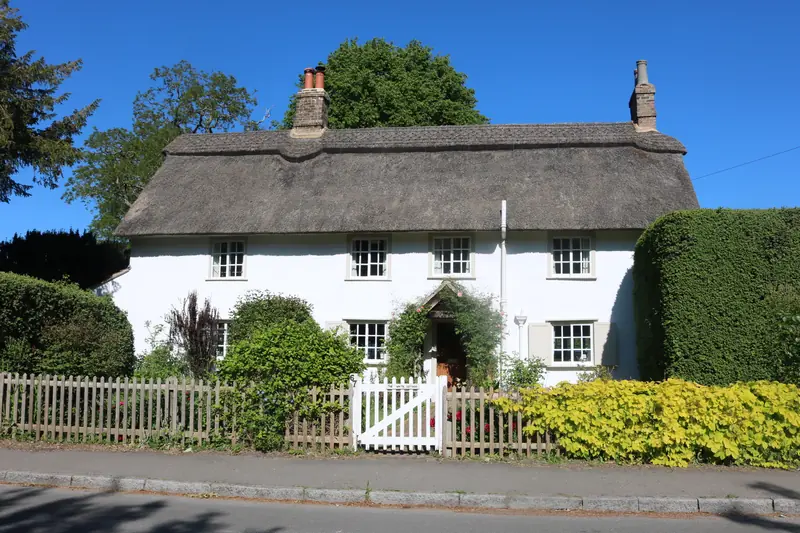
A boiler is a small object with a long reach. It can bring a new flue through old fabric, a condensate run down a wall, and pipes across a room that has kept its cornice. Those side effects are often the things that matter to the council. Consent is about special character, inside and out, and it applies whether or not planning permission is needed.
What does listing actually cover?
More than the front of the house. Listing covers the whole building, including the interior, fixed objects and curtilage structures older than 1 July 1948, at Grades I, II* and II. A cupboard at the back, or an outbuilding where a boiler might go, is not automatically outside it.
Carrying out work that needs consent without getting it is a criminal offence. The penalty is up to 6 months on summary conviction or 2 years on indictment, or a fine, or both. Government guidance says that if in doubt, ask the council first.
Where the local wording comes from
The best local statement is the South Cambridgeshire Listed Buildings guidance, adopted in July 2009 and still linked from the current Greater Cambridge page. It is 17 years old and comes from one of the two councils. A city address has the same shared planning service to ask, but this page has no equivalent wording from Cambridge City, so treat the table as a list of questions to take to the officer.
| The work | The wording | What to ask |
|---|---|---|
| New or upgraded services | "Maybe": not generally requiring consent, with care needed | Does this room count as sensitive? |
| Rooms with carvings, mouldings, cornices or plaster ceilings | Take care with these features | Where can pipes run instead? |
| Extra ventilation or flues | Consent may be necessary | Is the proposed route acceptable? |
| Services in Grade I or II* | May require consent | Does the grade change the answer? |
| Lining a flue | May require consent; reversible flexible steel liners normally supported | Which liner, if any? |
| Altering a hearth | Likely to need consent | What may stay as it is? |
The same document says consent is likely for minor alterations and "possibly even repairs", and that like-for-like applies only to existing traditional materials. So describing a new appliance as like-for-like may not get you far.
Is a more efficient boiler welcomed?
Possibly, but it is not a pass. The guidance lists fuel-efficient boilers and thermostatically controlled radiators among ways to improve a listed building's efficiency, while still asking the questions above. The energy rules have their own route: Part L in listed homes is not a blanket exemption.
Radiators and pipe runs have their own page. A new flue can also bring a plume onto a neighbour's side, covered under flue position and plume. A heat pump instead of a boiler raises separate planning rules.
Two systems that do not replace each other
Gas law applies regardless. Gas work must be done by a Gas Safe registered engineer, and the Gas Safety (Installation and Use) Regulations apply even to buildings exempt from the Building Regulations. Equally, an installer who need not notify Building Control is not telling you that listed building consent is settled. Those are separate questions, and the engineer does not decide the second one.
A new or replacement fixed gas appliance, other than cooking only, also needs a CO alarm in that room. Mention it to the officer if the room has sensitive finishes.
The council decides, and the time to ask is before any quote is accepted or any hole is drilled. Greater Cambridge offers listed building pre-application advice. Take photographs of the rooms and a drawing of the proposed flue and pipe routes.
Who decides what on a listed home
- Whether the work needs listed building consent
- The council, through its conservation officer
- Design route for flues and pipes in sensitive rooms
- The council, advised by the conservation officer
- Gas work, flues and commissioning
- A Gas Safe registered engineer
- Energy rules where character is at stake
- Building control, considering the conservation officer's advice
Other questions on this
Does swapping an old boiler in the same cupboard avoid the whole question?
Not automatically. Same place and same flue reduce the issues, but a different flue, extra ventilation or new pipe runs may bring consent into play. Describe the job to the conservation officer, and let the council say.
What should I bring to a first conversation with the officer?
The list entry and grade, photographs of each room affected, the proposed flue exit and pipe routes, and the engineer's reasons. A specific plan gets a more useful answer than a general question about boilers.
Is the 2009 guidance out of date?
Parts of it may be, as it pre-dates later changes such as the 2025 changes to heat pump planning rules. Use it to frame questions, and take the current position from the council.
Sources, read 4 November 2026: South Cambridgeshire Listed Buildings guidance, 2009; Greater Cambridge Planning: listed buildings; Planning (Listed Buildings and Conservation Areas) Act 1990, section 7; Planning (Listed Buildings and Conservation Areas) Act 1990, section 9; GOV.UK: conserving and enhancing the historic environment; Approved Document J.