Flood · Piece
Raising a boiler and services above flood water
Flood proofing a home in the UK can mean raising sockets, meters or boilers up the wall. Boiler moves are Gas Safe work, electrics are for an electrician, and a listed home needs the council's view first.
Most useful for: Flood-prone homes in Cambridge and fen-edge villages, including listed and conservation area houses
Compiled from the sources at the end. Updated .
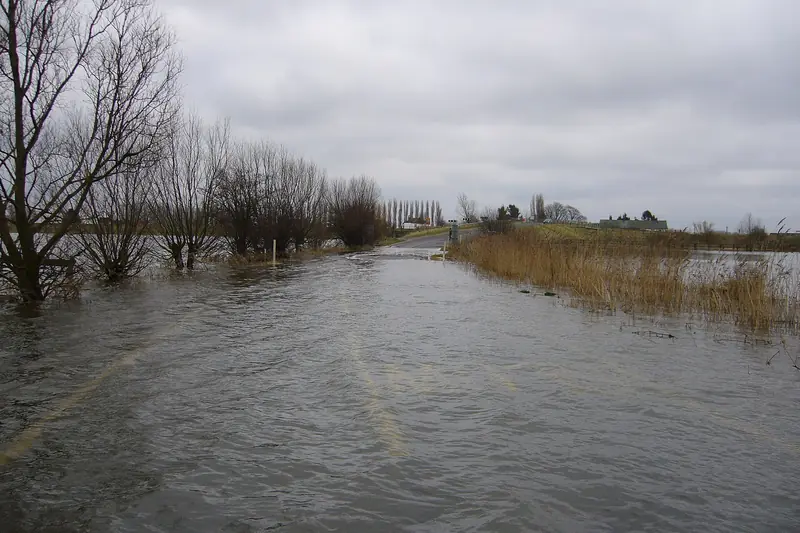
Raising services does not keep water out. It helps limit what the water reaches, and so what has to be checked, dried or replaced afterwards. This page gives no target height: that depends on the house and its risk, so raise it with the engineer pricing the work and with the National Flood Forum, which the County Council names for impartial advice.
What does the County Council suggest?
The County Council's flood preparation page lists raising sockets, meters or boilers up the wall, non-return valves, airbrick covers, tiles over carpets, and lime plaster. Each one falls to a different trade, and each can have a knock-on effect in an older house.
| Measure | Who does it | Ask first |
|---|---|---|
| Raising a boiler | Gas Safe registered engineer | Where do the flue and condensate go? |
| Raising sockets | Electrician | Is it notifiable under Part P? |
| Raising a meter | Ask the company responsible for that meter first | Who may move it? |
| Non-return valve | Ask your sewerage company about low-lying sites | Is the risk high or low? |
| Airbrick covers | Householder or builder | Does any vent serve a gas appliance? |
| Tiles, lime plaster | Tiler, plasterer | On a listed house, does it need consent? |
Who can move a boiler?
Only a Gas Safe registered engineer. HSE explains that a gas business must be on the register to do gas work legally, for natural gas and LPG. Read the ID card: photo, registration number and expiry on the front, work categories on the back. The checks before an engineer starts are on a separate page.
A boiler on a new wall brings other questions. The flue needs a safe outlet, and clearance is a matter for the engineer against Approved Document J, so see flue position and plume. Condensate to sanitary pipework needs at least 22mm pipe through a 75mm trap under Approved Document H. If the job includes a new or replacement appliance, Approved Document J also calls for a carbon monoxide alarm in that room.
HSE lists insulating board around boilers and in airing cupboards, cement flues and lagging among places asbestos can be in a home built or refurbished before 2000. Do not drill, break or remove anything suspect, and tell every contractor before they start. See asbestos around old boilers.
What changes in an older Cambridge house?
Basements come first. The New Town and Glisson Road appraisal describes some three-storey houses with basements in that area, and anything down there sits lowest when water arrives. In the Riverside area, the appraisal puts most of the area in the floodplain, and the same streets are a conservation area.
Electrics follow their own rule. Part P makes a new circuit, a consumer unit replacement, or an addition or alteration around a bath or shower notifiable. Moving sockets is electrician's work, and it is worth asking how the job will be certified.
Does a listed house change the plan?
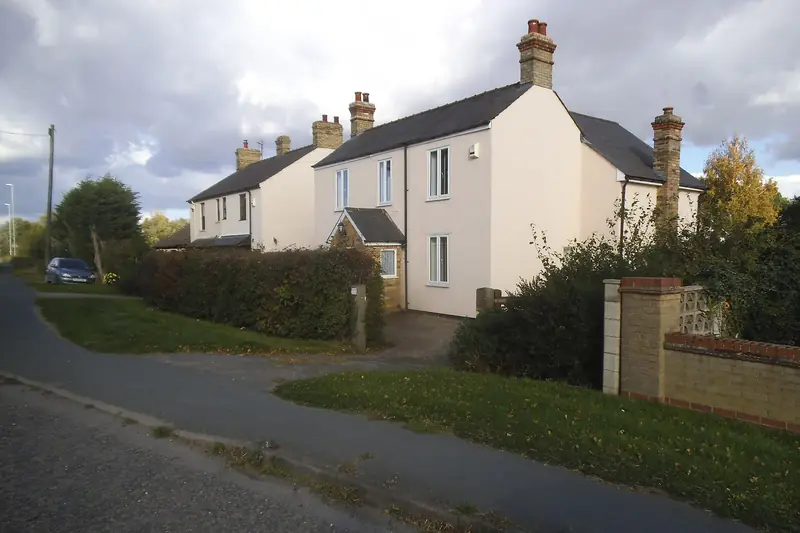
It can, and the council decides. The South Cambs Listed Buildings guidance from 2009 answers "Maybe" for services. New or upgraded services do not generally require consent, but care is needed in rooms with historic features, and consent may be necessary if additional ventilation or flues are required. Services in Grade I or II* buildings may require consent.
A raised boiler can mean a new flue route and new pipe runs, so ask the conservation officer before any quote is accepted, in the city as well as South Cambs. Doing work that needed consent without it is a criminal offence. Conservation areas have controls of their own. The page on listed building consent goes further.
How does Flood Re fit in?
Flood Re is funded by a levy of £160m a year on insurers. An insurer can pass the flood risk in a policy to it for a fixed price based on council tax band, with a £250 excess. The scheme runs until 2039, and its online tool checks eligibility. For an older house or a let, ask your insurer or use the tool for your address.
Build Back Better allows flood resilience measures of up to about £10,000 when repairing after a flood, according to the County Council. Ask whether your own policy includes it before repairs begin, so that like-for-like work does not go ahead first.
Who decides and who does the work
- Moving or altering a gas boiler
- A Gas Safe registered engineer
- Moving sockets or circuits
- An electrician
- Consent for work on a listed building
- The council, through the conservation officer
- Moving a water meter
- Your water company, which owns the meter
- Build Back Better on a claim
- Your insurer
Other questions on this
Can any plumber move a gas boiler?
Not unless that plumber's business is on the Gas Safe Register for the work. The register's consumer line is 0800 408 5500, and the back of the ID card shows which categories the person holds. Never open a boiler casing or alter gas pipes yourself.
Does Build Back Better pay before any flood?
The County Council describes it as applying when repairing after a flood. For work before that, ask your insurer and the National Flood Forum what help exists. Do not assume a grant will follow.
Should a raised boiler still get checked after a flood?
Yes, if water reached the house. GOV.UK says not to turn utilities back on until they have been checked, and on this site that means a Gas Safe registered engineer for gas. The after-flood steps set out the order.
Is a valve enough to stop sewage coming back?
It can help limit backflow, but it depends on the site and on upkeep. Approved Document H points to a pump where the risk is high in a basement with sanitary appliances, as the sewer flooding page explains.
Sources, read 4 November 2026: Cambridgeshire County Council: preparing for flooding; HSE: Gas Safe Register; Approved Document J; Approved Document H; Approved Document P; HSE: asbestos diagrams, domestic; HSE: asbestos questions; South Cambs Listed Buildings guidance, 2009; GOV.UK: historic environment guidance; Greater Cambridge Planning: conservation area works; New Town and Glisson Road appraisal; Riverside and Stourbridge Common appraisal; Waterbeach appraisal 1999; Flood Re: how it works; Flood Re: about; WaterSafe: leaking water meter; GOV.UK: after a flood.