Old pipes · Piece
Asbestos around old boilers, flues and tanks
Asbestos around an old boiler, flue or tank is possible in any home built or refurbished before 2000. Do not disturb it. Tell every contractor what you suspect before they start, and ask council environmental health for advice.
Most useful for: Pre-2000 homes and anyone planning boiler, tank or bathroom work
Compiled from the sources at the end. Updated .
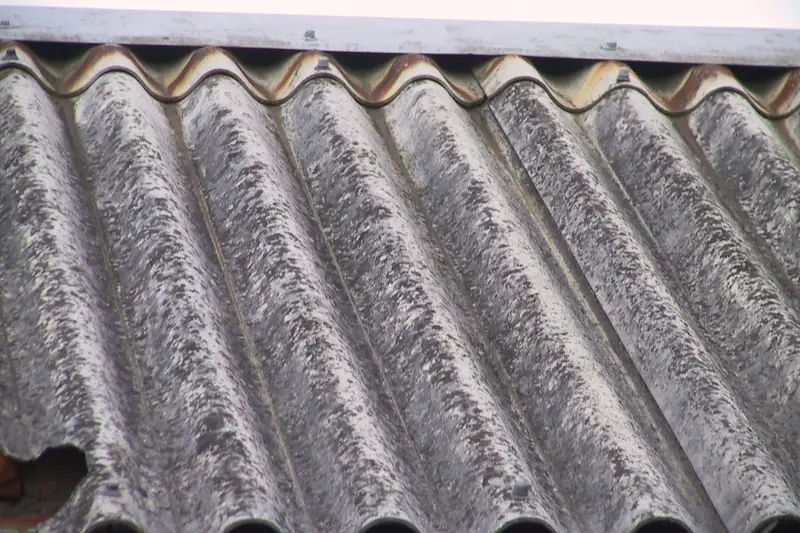
Older heating cupboards are where this tends to come up, because a boiler swap, a new cylinder or a tank removal means someone is about to drill, cut or lift. Asbestos does its harm when fibres are released, and the disease takes decades to appear and cannot be cured. The practical job is to know the likely places before the work begins.
Does a Victorian build date rule it out?
No. The HSE's test is built or refurbished before 2000, so the later work in an old house counts. A terrace from the Mill Road or New Town streets that had a boiler cupboard boxed in during an earlier refit falls inside the rule, whatever the date on the brickwork. A house built after 2000 is unlikely to contain it.
The Health and Safety Executive's chief medical adviser explains where asbestos can be found and why disturbing it is dangerous, in a film made for people who work on buildings. Not made by this site; duration 3:18.
Where does the HSE say to expect it?
The HSE's domestic diagram covers more of the plumbing and heating than many people expect. These are possibilities, not findings about your house.
| Where in the home | Possible material |
|---|---|
| Around a boiler | Asbestos insulating board (AIB) |
| Airing cupboard | AIB, or sprayed coating on a boiler |
| Pipes and old boilers | Lagging |
| Flues and pipes | Asbestos cement |
| Water tanks | Asbestos cement |
| Toilet | Cistern |
| Bathroom | AIB or cement bath panels |
The same list includes cement panels, Artex and floor tiles, which can matter when a pipe run crosses a ceiling or floor. For a tank in the loft, see old cold water tanks.
Why looks will not settle it
AIB is hard to tell from plasterboard, so a neat white panel behind a boiler proves nothing either way. No page can tell you what a material is from a description, and this one will not try.
Do not drill, sand, break, cut or sample anything you suspect, and do not open a boiler casing to look behind it. If work has started and a suspect material appears, ask for it to stop. Ask your council's environmental health team what to do next.
The HSE does say material in good condition and left undisturbed carries an "extremely low" risk and is often best left, with its condition checked now and then by looking. That is conditional on it staying intact. It does not make a damaged panel, or one in the way of a new flue, something to carry on around.
Before a boiler, tank or bathroom job
Say what you suspect in writing before the quote is agreed, and point to the place. Contractors in your home have the legal duty to protect you, and they can only plan for what they know about. Owner-occupiers are not legally responsible for risks to contractors, according to the HSE, but telling them is still what it asks of you. Landlords should check their own position instead of relying on that line.
High-risk work must go to an HSE-licensed contractor, and some lower-risk tasks need no licence. Which applies is not a call for a householder. A boiler replacement also needs a Gas Safe registered engineer for the gas work, and that registration is about gas: ask separately who will deal with any asbestos.
Who does what about suspected asbestos
- Advice on suspected asbestos at home
- Council environmental health
- Protecting you during the work
- The contractor in your home
- Telling contractors before they start
- You, the householder
- High-risk asbestos work
- An HSE-licensed contractor
- Gas parts, flues and boilers
- A Gas Safe registered engineer
Other questions on this
Can old lagging go in the household bin?
No. The HSE treats asbestos as hazardous waste, not household rubbish. Do not take it off in the first place: repair or removal by someone untrained is what its advice rules out.
Does a survey or home test kit let me check it myself?
Do not take a sample yourself, because that is the disturbance you are trying to avoid. Ask council environmental health how to get suspect material looked at, and tell any contractor what you suspect meanwhile.
Should I leave it if a tradesperson says it looks fine?
Looks cannot separate AIB from plasterboard, so ask what that opinion is based on. If the material is in the way of the job, the question of who is competent to deal with it still has to be answered before work continues.
Is one past exposure something to raise with a doctor?
The HSE information used here does not give medical advice on single exposures. If you are worried, speak to your GP and say what the material was and when it happened.
Sources, read 4 November 2026: HSE: asbestos introduction; HSE: why and where asbestos is found; HSE: asbestos FAQ; HSE: asbestos in the home diagram; HSE: location of asbestos materials; HSE: deciding if work is licensed.