Hard water · Piece
Before fitting a softener in an older house
A water softener in an older house can limit scale, but softened water may leach copper and lead from old pipes. Check the pipes first, keep an unsoftened kitchen tap and ask your water company about notice.
Most useful for: Pre-1970 homes, families with babies and anyone on a low-salt diet
Compiled from the sources at the end. Updated .
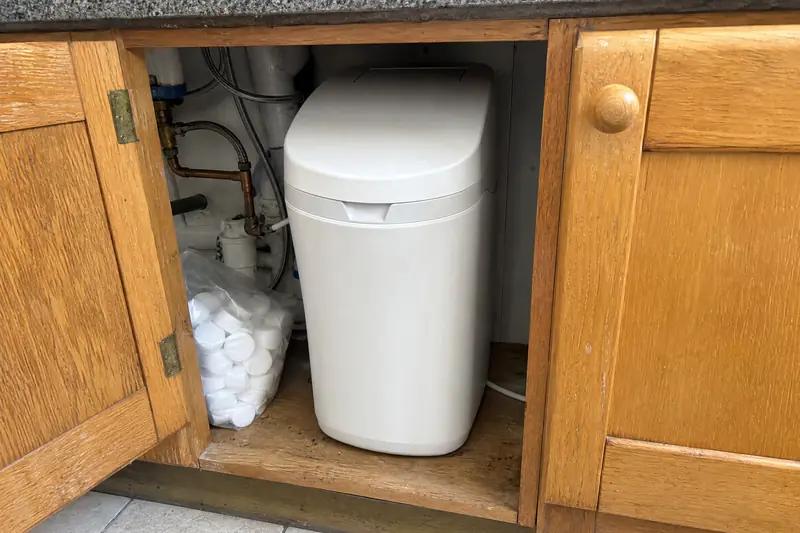
The Drinking Water Inspectorate (DWI) does not rule out a home softener, but it sets out cautions that weigh more in an old house than a new one. They come down to the pipes, the kitchen tap and how much of the house really needs softened water.
What can softened water do to old pipes?
DWI says softened water may be aggressive to plumbing and leach copper and lead. It also says pre-1970 homes may have lead, and that harder water forms a protective scale that can reduce lead. Taken together, those points are why the pipe question comes before the softener question. The council's appraisal of New Town and Glisson Road, for one, describes mostly 19th or early 20th century houses, so a lead check is a reasonable first step in streets of that age.
Unpainted lead is dull grey, often with a swollen joint by the stop tap. If you see that, ask a plumber or your water company, who will test at the kitchen tap on request. Pregnant people, babies and children are most at risk. See lead pipes in an older house.
Should the kitchen tap stay unsoftened?
DWI's advice is to keep an unsoftened supply to the kitchen tap for drinking and cooking. The national sodium standard is 200 mg Na/L at consumers' taps, and DWI says a softener "may risk breaching" it. Too much sodium is a problem for premature babies and people on low-salt diets, and DWI says not to use artificially softened water for baby feeds.
That separate tap is advice plus a standard, not a stand-alone law saying every softener must have one. Even so, in an older kitchen it is worth settling before the unit goes in, because it shapes where the pipework runs.
Whole house, or only the boiler feed?
DWI says softening only the feed to the cylinder or boiler is more economical than softening the whole supply. That may suit someone whose main concern is scale in the boiler, not soap or shower screens. Part L asks installers to treat that feed in hard water areas without naming a device, so ask whether a softened feed would meet what they plan.
| Option | What DWI says | What to weigh |
|---|---|---|
| Softening the whole supply | Keep an unsoftened kitchen tap; sodium standard applies at taps | Old pipes; backwash and salt; route for pipework |
| Softening only the cylinder or boiler feed | More economical than the whole supply | Taps and showers stay hard |
| Reverse osmosis | Waste stream of 20-30% of flow; can raise metered bills by up to a third | Not generally suitable for drinking; notice required by law |
| Magnetic device | Does not soften water | Sale-or-return; ask for in-home performance data |
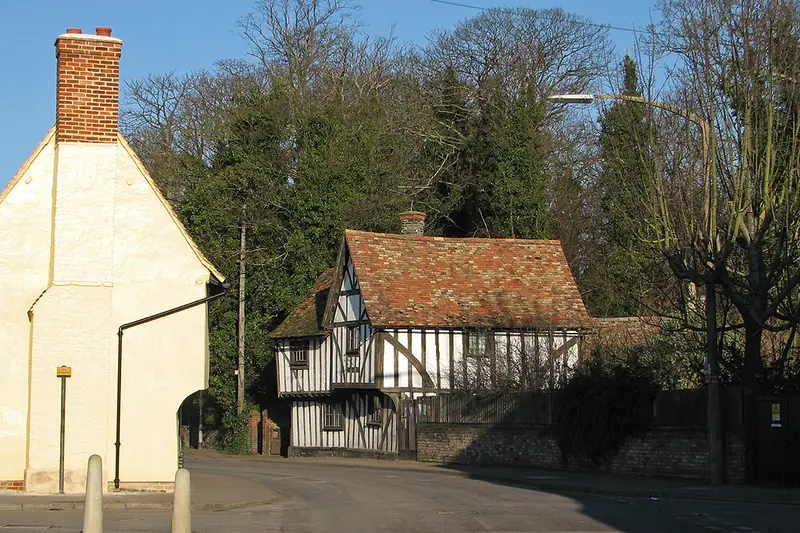
Older fabric adds practical limits. HSE's list of places asbestos can be found includes board in airing cupboards and around boilers, so tell the installer before they start and leave anything suspect undisturbed. In a listed building, South Cambs' 2009 guidance names introducing pipework as something to consider, so ask the conservation officer first; radiators and new pipework has more.
Do you have to tell the water company?
Products must meet regulation 4 of the 1999 fittings regulations. Regulation 5 requires notice and consent before installing "a water treatment unit which produces a waste water discharge or which requires the use of water for regeneration or cleaning". It does not use the word softener; reading it to cover softeners is this site's interpretation, so confirm with your water company. DWI separately says to check with them before installing. The page on fittings rules covers who can do the work.
Living with one
DWI says softeners need regular backwash and salt. That means water use for regeneration and somewhere to keep salt, which matters in a small terrace with little storage. It also says not to buy from door-to-door sellers offering water tests, and to report them to trading standards. Get your hardness figure from your water company instead.
Who settles what
- Whether your pipes contain lead
- A plumber or your water company
- Notice and consent for a softener
- Confirm with your water company
- Plumbing work under the fittings rules
- A competent plumber, such as one on WaterSafe
- Pipework in a listed building
- The council; ask the conservation officer first
- Scale measure on a new boiler
- The installer, under Part L
Other questions on this
Can softened water go in a baby's bottle?
DWI says do not use artificially softened water for baby feeds. Too much sodium is a problem for premature babies. An unsoftened kitchen tap is the simple way to keep the two apart.
Does a reverse osmosis unit avoid the softener cautions?
It raises different ones. DWI says the waste stream is 20-30% of flow, metered bills can rise by up to a third, and notice to the water company is required by law. It also says the water is not generally suitable for drinking.
Can a tenant fit a softener?
Installations for water supply are the landlord's to keep in repair under the Landlord and Tenant Act 1985, so talk to the landlord before changing anything. Fittings rules place duties on occupiers as well as owners. Landlord duties on heating and hot water has more on who does what.
Sources, read 4 November 2026: Drinking Water Inspectorate: filters and softeners; Drinking Water Inspectorate: water hardness; Drinking Water Inspectorate: standards and regulations; Drinking Water Inspectorate: lead in drinking water; Water Supply (Water Fittings) Regulations 1999, regulation 5; Drinking Water Inspectorate: finding a plumber; HSE: asbestos diagrams; South Cambridgeshire Listed Buildings SPD (2009); New Town and Glisson Road Conservation Area Appraisal; Landlord and Tenant Act 1985, section 11.