Old pipes · Piece
Shared pipes and drains in Cambridge terraces
A shared drain in a terraced house is usually a sewer, and since 1 October 2011 most that connect to the public system belong to the sewerage company. A drain serving only your house, inside your boundary, stays yours.
Most useful for: Terrace owners, landlords and buyers with a pipe running under neighbouring gardens
Compiled from the sources at the end. Updated .
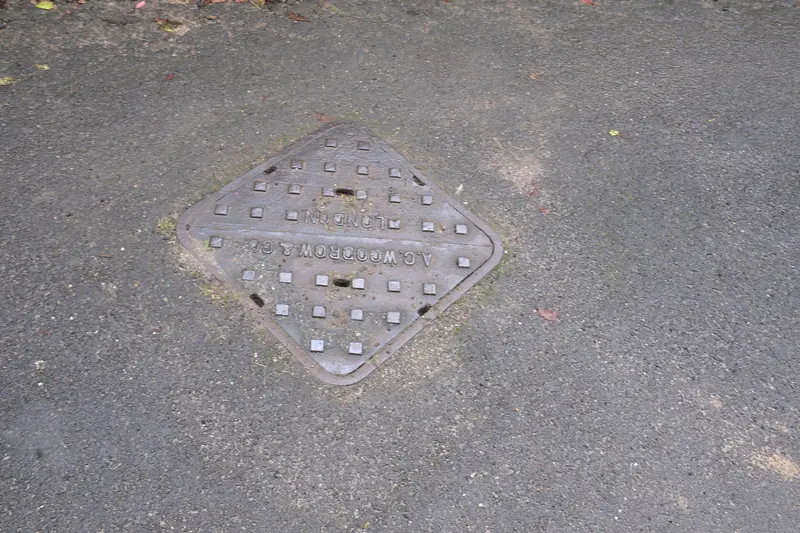
Terraces make this question common because houses sit so close. The Mill Road appraisal describes terraces north of Mill Road standing directly on the pavement, and Newnham Croft's has small fronts and long, thin back gardens. Neither appraisal maps any drain. The sewerage company's records or a drain survey are better guides to where yours actually runs.
What changed in 2011?
Under the 2011 Regulations, private sewers and lateral drains that connected to a public sewer as at 1 July 2011 passed to the sewerage company on 1 October 2011. Before then these pipes were private. Older paperwork on a house may still read that way, so ask the company who is responsible today before relying on it.
The date matters for newer pipes too. A run added after 1 July 2011 was not part of that transfer, so ask the company how it treats yours.
Is the pipe under my garden a sewer or a drain?
Defra's guidance turns on what the pipe serves and where it sits, not on who owns the ground above.
| The pipe | What it is | Who is responsible |
|---|---|---|
| Serves more than one property and reaches the public system | Sewer | Sewerage company |
| Serves one property, outside its boundary | Lateral drain | Sewerage company |
| Serves one property, inside its boundary | Drain | Property owner |
| Drains to a septic tank, cesspit or private treatment plant that does not discharge to the public system | Private sewer | Stays private |
In a typical terrace, the run behind the back walls that takes more than one house's waste would fall into the first row, and the short branch from your own kitchen into the third. Treat that as a way to frame the question. A company plan or a drain survey gives the answer for your address.
Inside the house, the drainage serving only your home stays with you, including the traps under sinks and baths.
Who do you call when it blocks?
An overflowing sewer goes to your water company, and the city council gives the same route. The County Council names Anglian Water as an example of a company responsible for flooding from its pipes, but do not assume it for your address: your bill will show who handles your sewerage. If next door has the same trouble, say so when you ring, since it can point to a shared length. For repeated sewage in the house, see sewer flooding and non-return valves.
Do not lift a heavy cover to look, and never climb into a manhole or inspection chamber. A chamber is a job for the company or a drainage contractor.
What about the water coming in?
Everything above concerns waste. A clean water supply pipe shared between houses is a separate matter, and no official statement on it was available to this site. Ask the company named on your water bill who holds responsibility for a shared run on your street, and ask for the answer in writing. The general split between company and owner is set out in stop taps and supply pipes, and if the shared run leaves you short at the tap, see low water pressure.
Who deals with which pipe
- Sewer or lateral drain connected to the public system
- Your sewerage company
- Drain serving only your house, inside your boundary
- The property owner
- Septic tank, cesspit or private plant not discharging to the public system
- Stays private, not the sewerage company
- Drains in a rented house
- The landlord, under section 11 where it applies
- Shared clean water supply pipe
- Ask your water company
Other questions on this
Does the 2011 transfer mean neighbours no longer split a sewer repair?
For a pipe that transferred, responsibility sits with the sewerage company and not with the households along it. Ask the company to confirm the pipe's status first, since a run that was never connected to the public system may not have moved.
Does a house in a fen-edge village get the same treatment?
The Defra test is the same: where the pipe goes and what it serves. If your village house drains to a septic tank or private plant that does not reach the public system, the sewers to it stay private.
Can a landlord pass drain repairs to the tenants?
Section 11 of the Landlord and Tenant Act 1985 lists drains and external pipes among what a landlord keeps in repair, subject to its terms. Tenants should report a problem to the landlord, and raise an overflowing sewer with the water company as well.
Sources, read 4 November 2026: Defra: private sewers transfer guidance; Water Industry (Schemes for Adoption of Private Sewers) Regulations 2011; GOV.UK: what to do during a flood; Cambridge City Council: emergencies and major incidents; Cambridgeshire County Council: flooding, who is responsible; Landlord and Tenant Act 1985, section 11; Mill Road conservation area appraisal; Newnham Croft conservation area appraisal.