Who does what · Piece
Stop taps and supply pipes: where responsibility changes hands
Responsibility for water pipes in the UK divides at the outside stop valve: the water company from the main to the valve, the property owner from the valve to the home and for everything inside.
Most useful for: Owners, landlords and tenants of older houses, especially terraces
Compiled from the sources at the end. Updated .
That rule comes from the Drinking Water Inspectorate (DWI) and describes England; Wales and Scotland can differ. It tells you who owns which stretch, which is the starting point for who pays. Leak allowances, insurance and repair schemes vary, so ask the company named on your bill what it offers before work starts.
Where does the water company's pipe end?
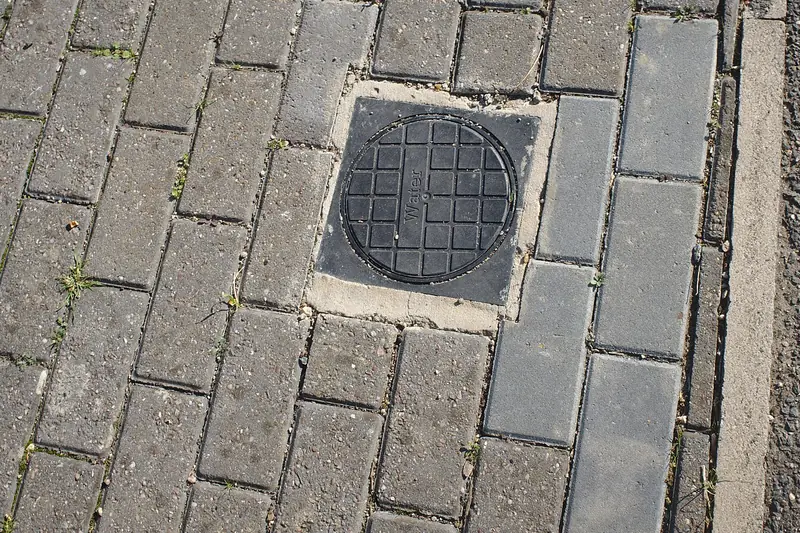
DWI sets it out in order: the stretch from the main to the outside stop valve is the communication pipe, and that is the water company's. From the stop valve to the home is the supply pipe, and that is the owner's. Everything inside the home belongs to the owner too.
| Stretch | Name | Responsible |
|---|---|---|
| Main to outside stop valve | Communication pipe | Water company |
| Outside stop valve to the home | Supply pipe | Property owner |
| Inside stop tap and everything beyond it | Pipes in the home | Property owner |
| Water meter | Meter | Water company owns and repairs it; owner responsible for connected pipes |
The meter row comes from WaterSafe, an industry source; the water meter page has the rest. The outside valve itself is less clear, because DWI defines the pipes either side of it, not the valve. If it needs attention, start with your water company. Do the same before touching it yourself.
In a tenancy the picture shifts. Under section 11 of the Landlord and Tenant Act 1985, the landlord keeps water installations, drains and external pipes in repair, subject to ss.13-14. See landlord duties when heating or hot water fails.
What if the supply pipe is shared?
Terraces can throw up a shared supply, where one pipe serves more than one house. No official statement on who answers for a shared water supply pipe was available here, so ask the water company, and do it before a problem arises if you can. A buyer can ask the surveyor and solicitor as well. Drains are a different matter, with clearer rules since 2011: see shared pipes and drains in terraces.
Does the lead question change who pays?
It can bring the company in. DWI says pre-1970 homes may have lead and that a company is legally required to replace its pipe if that pipe is lead and at risk of contributing, so notify the company when you replace yours. If you dig up a supply pipe, the fittings rules matter as well: regulation 5 requires notice and consent for water laid outside at less than 750mm or more than 1350mm deep. Finding a plumber explains who can sign that kind of work off.
Unpainted lead is dull grey, often with a swollen joint by the tap. Do not test it yourself: ask a plumber or your water company. Lead pipes in an older house explains why babies, children and pregnant people are most at risk.
How do you find your stop tap before you need it?
Choose a quiet day, not the moment a pipe bursts.
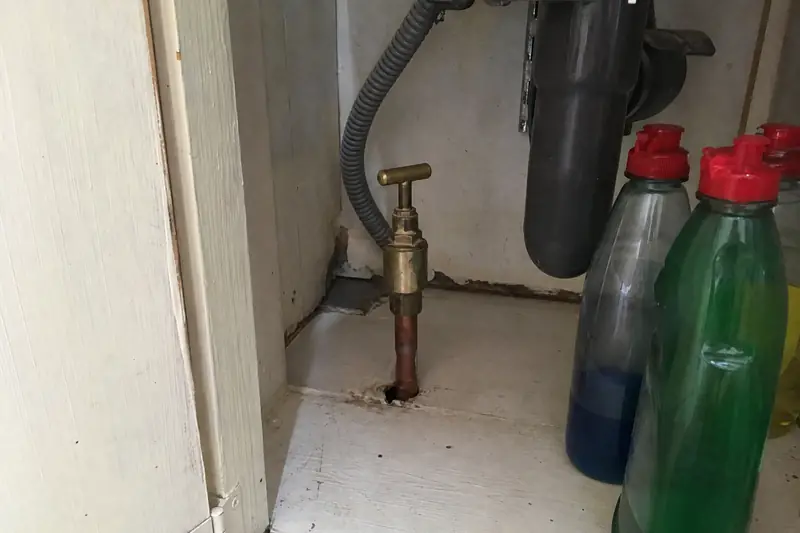
- Look where the supply comes in, commonly under the kitchen sink. In an older house it can also be under the stairs or under a floor.
- Check that it turns. An old one that has not moved in years may stick, and forcing it can cause a leak, so ask a plumber if it will not shift.
- Make sure everyone in the house knows where it is, including tenants and students sharing.
- If there are small isolating valves on the pipes to taps or appliances, learn which is which, since they shut off one fitting without stopping the whole house.
Valves of that small kind come in many patterns, and anything fitted in a home here has to meet the fittings rules.
Northumbrian Water shows where to find the stop tap inside your home and how to turn the water off and on again. Who answers for the outside stop tap is Northumbrian Water's position for its own area; ask your own water company. Not made by this site; duration 1:24.
When the water is on the floor
Close the inside stop tap first. If water is near electrics, do not touch switches while standing in water, and treat power cuts or electrical hazards as a call to 105. In cold weather, frozen pipes bring their own steps. Low flow with no leak may be something else again: the legal standard is 7 metres static head in the communication pipe, and the pressure page explains how to check.
Who deals with which part
- Communication pipe, main to outside stop valve
- The water company
- Water meter
- The water company
- Supply pipe, outside stop valve to the home
- The property owner
- Pipes and inside stop tap
- The property owner
- Repairs in a tenancy
- The landlord, under section 11
- A shared supply pipe
- Ask the water company
Other questions on this
Who pays for a leak under my front garden?
It depends which side of the outside stop valve it is. On the street side it is the company's communication pipe, and on the house side it is your supply pipe. If you cannot tell, ask the company on your bill to look at it.
Is the stop tap outside my house mine?
DWI defines the pipes either side of the valve without saying who owns the valve. Your water company is the one to ask, and it will know how it treats its own area.
Does a tenant need to know where the stop tap is?
Yes, for practical reasons, as a tenant is often the first to see a burst. The landlord remains responsible for repairs under section 11. Ask at move-in and test that it turns.
Sources, read 4 November 2026: Drinking Water Inspectorate: lead in drinking water; WaterSafe: check stop taps; WaterSafe: leaking water meter; Water Supply (Water Fittings) Regulations 1999, regulation 5; Landlord and Tenant Act 1985, section 11; UK SI 2017/246 (pressure standard, reg 17G); GOV.UK: during a flood.